Monads in Minecraft
"A monad is just a monoid in the category of endofunctors""A monad is a burrito"
Metaphors concocted by the deranged minds of those who write in Haskell.
So, let's look at Minecraft:
::
->
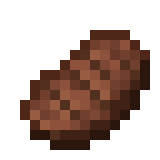
We have a function: a furnace
which is of the type (::) of turning
raw beef into (->) steak .If this, and functions with more arguments, are not intuitive to you, read up on Haskell right now.
class Functor f where
	fmap :: (a -> b) -> f a -> f b
	(<$) :: a -> f b -> f a
This is the functor, you can make one by implementing fmap and <$ and mentioning it's an instance of the class, the simplest of the hierarchy of functors, applicatives and monads. Functors let you apply a function to a value in a context, but what does that mean? A context "is a burrito" but what is that.
class Functorwhere fmap ::

->
I see, that's why it's said to be a burrito with filling.. A context
wraps a value and just provides some abstraction.Let's put our item in a chest then, but, problem, our function
is
not a function that takes a but one that takes a . We need to use 'fmap' to take it out  of a chest, apply and put it back in one.
'fmap' is the autosmelter. Oh also (<$) exists and replaces an item.
class Functor f => Applicative f where
	pure :: a -> f a
	(<*>) :: f (a -> b) -> f a -> f b
An applicative expands on the functor, it allows lifting a value into a context and applying a function from a context.
class Functor
Ah, so what that actually means is that we can finally put items
in
a chest .We also learned what to do if our furnace
is in a chest so we don't need to panic anymore but can just place it down for a working autosmelter, as long
as everything is wrapped in a context in the end.class Applicative m => Monad m where (>>=) :: m a -> (a -> m b) -> m b (>>) :: m a -> m b -> m b return :: a -> m a
Time for the monad, it uses everything so far and covers two more cases.
Also lifting is now called 'return' instead of 'pure' because the lazy Haskellers haven't made it an alias yet.
class Applicative
If we have a function that already puts an item in a chest by itself :: ->
Then we cannot use 'fmap' which also likes putting it in a chest, and so we have >>=. :: -> With >> we can replace an item like we could with (<$), but now with our
in a chest too.